Thursday, July 26, 2012

Heart Attack

The National Heart Lung and Blood Institute (US) has published the following article:

What Is a Heart Attack?

A heart attack occurs if the flow of oxygen-rich blood to a section of heart muscle suddenly becomes blocked. If blood flow isn't restored quickly, the section of heart muscle begins to die.  Heart attacks are a leading killer of both men and women in the United States. The good news is that excellent treatments are available for heart attacks. These treatments can save lives and prevent disabilities.   Heart attack treatment works best when it's given right after symptoms occur. If you think you or someone else is having a heart attack, call 9–1–1 right away.

Overview

Heart attacks most often occur as a result of coronary heart disease (CHD), also called coronary artery disease. CHD is a condition in which a waxy substance called plaque (plak) builds up inside the coronary arteries. These arteries supply oxygen-rich blood to your heart.  When plaque builds up in the arteries, the condition is called atherosclerosis (ath-er-o-skler-O-sis). The buildup of plaque occurs over many years.  Eventually, an area of plaque can rupture (break open) inside of an artery. This causes a blood clot to form on the plaque's surface. If the clot becomes large enough, it can mostly or completely block blood flow through a coronary artery.   If the blockage isn't treated quickly, the portion of heart muscle fed by the artery begins to die. Healthy heart tissue is replaced with scar tissue. This heart damage may not be obvious, or it may cause severe or long-lasting problems.

A less common cause of heart attack is a severe spasm (tightening) of a coronary artery. The spasm cuts off blood flow through the artery. Spasms can occur in coronary arteries that aren't affected by atherosclerosis.  Heart attacks can be associated with or lead to severe health problems, such as heart failure and life-threatening arrhythmias (ah-RITH-me-ahs).  Heart failure is a condition in which the heart can't pump enough blood to meet the body's needs. Arrhythmias are irregular heartbeats. Ventricular fibrillation is a life-threatening arrhythmia that can cause death if not treated right away.

Get Help Quickly

Acting fast at the first sign of heart attack symptoms can save your life and limit damage to your heart. Treatment works best when it's given right after symptoms occur.   Heart attack symptoms include:
  • Chest pain or discomfort. This involves uncomfortable pressure, squeezing, fullness, or pain in the center or left side of the chest that can be mild or strong. This discomfort or pain often lasts more than a few minutes or goes away and comes back.
  • Upper body discomfort in one or both arms, the back, neck, jaw, or upper part of the stomach.
  • Shortness of breath, which may occur with or before chest discomfort.
  • Nausea (feeling sick to your stomach), vomiting, light-headedness or sudden dizziness, or breaking out in a cold sweat.
Symptoms also may include sleep problems, fatigue (tiredness), and lack of energy.   If you think you or someone else may be having a heart attack, call 9–1–1 right away. Quick treatment can save your life.  Do not drive to the hospital or let someone else drive you. Call an ambulance so that medical personnel can begin life-saving treatment on the way to the emergency room. Take a nitroglycerin pill if your doctor has prescribed this type of treatment.

Outlook

Each year, about 1.2 million people in the United States have heart attacks, and many of them die. CHD, which often results in heart attacks, is the leading killer of both men and women in the United States.   Many more people could survive or recover better from heart attacks if they got help faster. Of the people who die from heart attacks, about half die within an hour of the first symptoms and before they reach the hospital.

Other Names for a Heart Attack:
  • Myocardial infarction (MI)
  • Acute myocardial infarction (AMI)
  • Acute coronary syndrome
  • Coronary thrombosis
  • Coronary occlusion


What Causes a Heart Attack?

Coronary Heart Disease

A heart attack happens if the flow of oxygen-rich blood to a section of heart muscle suddenly becomes blocked. Most heart attacks occur as a result of coronary heart disease (CHD).   CHD is a condition in which a waxy substance called plaque builds up inside of the coronary arteries. These arteries supply oxygen-rich blood to your heart.   When plaque builds up in the arteries, the condition is called atherosclerosis. The buildup of plaque occurs over many years.   Eventually, an area of plaque can rupture (break open) inside of an artery. This causes a blood clot to form on the plaque's surface. If the clot becomes large enough, it can mostly or completely block blood flow through a coronary artery.   If the blockage isn't treated quickly, the portion of heart muscle fed by the artery begins to die. Healthy heart tissue is replaced with scar tissue. This heart damage may not be obvious, or it may cause severe or long-lasting problems.

Coronary Artery Spasm

A less common cause of heart attack is a severe spasm (tightening) of a coronary artery. The spasm cuts off blood flow through the artery. Spasms can occur in coronary arteries that aren't affected by atherosclerosis.  What causes a coronary artery to spasm isn't always clear. A spasm may be related to:
  • Taking certain drugs, such as cocaine
  • Emotional stress or pain
  • Exposure to extreme cold
  • Cigarette smoking


Who Is at Risk for a Heart Attack?

Certain risk factors make it more likely that you'll develop coronary heart disease (CHD) and have a heart attack. You can control many of these risk factors.

Risk Factors You Can Control

The major risk factors for a heart attack that you can control include:
Some of these risk factors—such as obesity, high blood pressure, and high blood sugar—tend to occur together. When they do, it's called metabolic syndrome.  In general, a person who has metabolic syndrome is twice as likely to develop heart disease and five times as likely to develop diabetes as someone who doesn't have metabolic syndrome.   For more information about the risk factors that are part of metabolic syndrome, go to the Health Topics Metabolic Syndrome article.

Risk Factors You Can't Control

Risk factors that you can't control include:
  • Age. The risk of heart disease increases for men after age 45 and for women after age 55 (or after menopause).
  • Family history of early heart disease. Your risk increases if your father or a brother was diagnosed with heart disease before 55 years of age, or if your mother or a sister was diagnosed with heart disease before 65 years of age.
  • Preeclampsiaexternal link icon (pre-e-KLAMP-se-ah). This condition can develop during pregnancy. The two main signs of preeclampsia are a rise in blood pressure and excess protein in the urine. Preeclampsia is linked to an increased lifetime risk of heart disease, including CHD, heart attack, heart failure, and high blood pressure.

What Are the Signs and Symptoms of a Heart Attack?

Not all heart attacks begin with the sudden, crushing chest pain that often is shown on TV or in the movies. In one study, for example, one-third of the patients who had heart attacks had no chest pain. These patients were more likely to be older, female, or diabetic.

The warning signs and symptoms of a heart attack aren't the same for everyone. Many heart attacks start slowly as mild pain or discomfort. Some people don't have symptoms at all. Heart attacks that occur without any symptoms or very mild symptoms are called silent heart attacks.

Chest Pain or Discomfort

The most common heart attack symptom is chest pain or discomfort. This includes new chest pain or discomfort or a change in the pattern of existing chest pain or discomfort.

Most heart attacks involve discomfort in the center or left side of the chest that often lasts for more than a few minutes or goes away and comes back. The discomfort can feel like uncomfortable pressure, squeezing, fullness, or pain. The feeling can be mild or severe.

Heart attack pain sometimes feels like indigestion or heartburn.

The symptoms of angina (an-JI-nuh or AN-juh-nuh) can be similar to the symptoms of a heart attack. Angina is chest pain that occurs in people who have coronary heart disease, usually when they're active. Angina pain usually lasts for only a few minutes and goes away with rest.

Chest pain or discomfort that doesn't go away or changes from its usual pattern (for example, occurs more often or while you're resting) can be a sign of a heart attack.

All chest pain should be checked by a doctor.

Other Common Signs and Symptoms

Other common signs and symptoms of a heart attack include new onset of:
  • Upper body discomfort in one or both arms, the back, neck, jaw, or upper part of the stomach
  • Shortness of breath, which may occur with or before chest discomfort
  • Nausea (feeling sick to your stomach), vomiting, light-headedness or sudden dizziness, or breaking out in a cold sweat
  • Sleep problems, fatigue (tiredness), or lack of energy
Not everyone having a heart attack has typical symptoms. If you've already had a heart attack, your symptoms may not be the same for another one. However, some people may have a pattern of symptoms that recur.  The more signs and symptoms you have, the more likely it is that you're having a heart attack.


Act Fast!

The signs and symptoms of a heart attack can develop suddenly. However, they also can develop slowly—sometimes within hours, days, or weeks of a heart attack.

Know the warning signs of a heart attack so you can act fast to get treatment for yourself or someone else. The sooner you get emergency help, the less damage your heart will sustain.

Call 9–1–1 for help right away if you think you or someone else may be having a heart attack. You also should call for help if your chest pain doesn't go away as it usually does when you take medicine prescribed for angina.

Do not drive to the hospital or let someone else drive you. Call an ambulance so that medical personnel can begin life-saving treatment on the way to the emergency room.


For references, visit Free E-Books on Heart Disease.

Sunday, July 15, 2012

Skin Rashes


SKIN RASHES
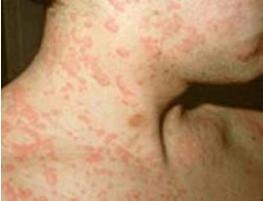
are abnormal changes in the skin color or texture, By another definition, a rash is a breaking out of the skin.

Rashes According To Size, Shape, and Consistency
A macule is a small skin discoloration in the level of the skin, neither raised, nor depressed, and therefore non-palpable.

 A papule  is a small (<1cm) palpable, raised, solid, flat skin spot.

Red Rashes

An erythema refers to a skin redness that affects a localized area (> 1cm) of the skin, due to an inflammation of the skin, like in sunburn, systemic lupus erythematosus or erythema nodosum. Erythema results from dilation (widening) and congestion of the skin capillaries.


An eczema refers to a localized area of inflamed skin that is red, scaly, and covered with vesicles or crusts. It is a result of an allergic or non-allergic response to skin irritation.


Hives or urticaria  is a slightly raised, pink or red, bumpy or patchy rash that usually itches. It is a symptom of an allergic reaction, mediated by substance histamine, and represents accumulation of fluid and inflammatory cells that came out from the skin blood vessels. It may be a result of a skin irritation, or allergic reaction to foods, medicines, hair dyes or other substances.


DIAPER RASH

This is a common type of contact dermatitis that occurs in most infants who wear diapers when feces and urine are in contact with skin for too long.


HOW TO TREAT RASHES

Most rashes are not dangerous to a person or people in the vicinity (unless they are part of an infectious disease such as chickenpox). Many rashes last a while and get better on their own. It is therefore not unreasonable to treat symptoms like itchy and/or dry skin for a few days to see whether the condition gets milder and goes away.
Non-prescription (over-the-counter) remedies include: anti-itch creams containing camphor, menthol, pramoxine (Itch-X), or diphenhydramine (Benadryl); antihistamines like diphenhydramine, chlortrimeton, or loratadine (Claritin, Claritin RediTabs, Alavert); and moisturizing lotions.

Home Care:

Most simple rashes will improve with gentle skin care and avoiding irritating substances. Follow these general guidelines:
  • Avoid scrubbing your skin.
  • Use as little soap as possible. Use gentle cleansers instead.
  • Avoid applying cosmetic lotions or ointments directly on the rash.
  • Use warm (not hot) water for cleaning. Pat dry, don't rub.
  • Eliminate any newly added cosmetics or lotions.
  • Leave the affected area exposed to the air as much as possible.
  • Try calamine medicated lotion for poison ivy, oak, or sumac as well as other types of contact dermatitis.

Call your health care provider if:

  • You are short of breath, your throat is tight, or your face is swollen
  • Your child has a purple rash that looks like a bruise
Call your health care provider if:
  • You have joint pain, fever, or a sore throat
  • You have streaks of redness, swelling, or very tender areas as these may indicate an infection
  • You are taking a new medication -- DO NOT change or stop any of your medications without talking to your doctor
  • You may have a tick bite
  • Home treatment doesn't work, or your symptoms get worse.  
 R. Y. MANABAT, R.N.

For references, you may visit Free Dermatology Ebooks.

Tuesday, July 3, 2012

Best Foods For Your Body

In order for your body to function on a daily basis, you need to eat. But that's only half the battle. If you choose to eat foods that don't promote good health, your body will not function at optimal levels, and your risks for chronic diseases may increase. The best foods for your body are ones that offer you health benefits.


10 BEST FOODS FOR YOUR BODY

TOMATOES
Tomatoes contain a powerful antioxidant called "lycopene." According to the Mayo Clinic, foods that contain lycopene can help men lower their risk for prostate cancer. But women can also benefit from tomatoes. According to research at Brigham and Women's Hospital, Boston, MA, consumption of lycopene can help lower the risk for cardiovascular disease. Although any type of tomatoes have lycopene, the concentration gets stronger when they are stewed or in the form of sauce or ketchup.

ACAI
Acai is a powerful antioxidant fruit. According to Dr. Nicholas Perricone, eating acai pulp can combat premature aging, promote cardiovascular health and improve digestive health.

SALMON
Salmon is high in protein and has omega-3 fatty acids. These healthy fats help protect your heart from cardiovascular disease.

BARLEY
Barley is a grain that's high in fiber and moderately high in protein. Eating barley on a regular basis can lower cholesterol levels, help prevent cancer by speeding food through the digestive tract and slow down the digestion of starch, which can stabilize blood sugar levels.

SPINACH
Spinach is high in iron, folate, manganese, vitamin A, vitamin K and magnesium. It can help reduce your risks for certain cancers and it can also improve brain function.

YOGURT
Yogurt is a fermented dairy product that has calcium, protein and healthy bacteria that help keep your digestive system working optimally.

OATMEAL
Oatmeal is high in fiber and contains zinc, copper and potassium

BROCCOLI
Broccoli is a cruciferous vegetable that has a substance called "sulforaphane," which can help reduce your risks for cancer. It is also high in vitamin K, vitamin C and beta-carotene.

PEPPERS
Chili peppers are high in vitamin C and antioxidants, which can help boost your immune system.

ASPARAGUS
Asparagus contains folic acid, which can help release a neurotransmitter called "serotonin" that can help regulate your moods.

Combine your healthy diet with regular exercise and enough sleep and you are on your way to a leaner, healthier you! 

r. y. manabat, r.n.

Tuesday, June 12, 2012

Arthritis

ARTHRITIS comes from the Greek arthron meaning "joint" and the Latin itis meaning "inflammation".  Arthritis affects the musculo-skeletal system, specifically the joints. It is the main cause of disability among people over fifty-five years of age in industrialized countries.

There are over 100 types of arthritis.  Here is a description of some common ones, together with the causes:
 
·                        Osteoarthritis. Cartilage loses its elasticity. If the cartilage is stiff it becomes damaged more easily. The cartilage, which acts as a shock absorber, will gradually wear away in some areas. As the cartilage becomes damaged tendons and ligaments become stretched, causing pain. Eventually the bones may rub against each other causing very severe pain.

·                        Rheumatoid arthritis.  This is an inflammatory form of arthritis. The synovial membrane (synovium) is attacked, resulting in swelling and pain. If left untreated, the arthritis can lead to deformity. Rheumatoid arthritis is significantly more common in women than men and generally strikes when the patient is aged between 40 and 60. However, children and much older people may also be affected.

·                        Infectious arthritis (septic arthritic) - an infection in the synovial fluid and tissues of a joint. It is usually caused by bacteria, but could also be caused by fungi or viruses. Bacteria, fungi or viruses may spread through the bloodstream from infected tissue nearby, and infect a joint. Most susceptible people are those who already have some form of arthritis and develop an infection that travels in the bloodstream.

·                        Juvenile rheumatoid arthritis (JRA) - means arthritis that affects a person aged 16 or less. JRA can be various forms of arthritis; it basically means that a child has it. 

 SIGNS and SYMPTOMS OF ARTHRITIS


The symptoms of arthritis depend on the type of arthritis, for example:

·                        Osteoarthritis. The symptoms develop slowly and get worse as time goes by. There is pain in a joint, either during or after use, or after a period of inactivity. There will be tenderness when pressure is applied to the joint. The joint will be stiff, especially first thing in the morning. The patient may find it harder to use the joint - it loses its flexibility. Some patients experience a grating sensation when they use the joint. Hard lumps, or bone spurs may appear around the joint. In some cases the joint might swell. The most common affected joints are in the hips, hands, knees and spine.

·                        Rheumatoid arthritisThe patient often finds the same joints in each side of the body are painfully swollen, inflamed, and stiff. The fingers, arms, legs and wrists are most commonly affected. Symptoms are usually worst on waking up in the morning and the stiffness can last for 30 minutes at this time. The joint is tender when touched. Hands may be red and puffy. There may be rheumatoid nodules (bumps of tissue under the skin of the patient's arms). Many patients with rheumatoid arthritis feel tired most of the time. Weight loss is common. 

The smaller joints are usually noticeably affected first. Experts say patients with rheumatoid arthritis have problems with several joints at the same time. As the arthritis progresses it spreads from the smaller joints in your hands, wrists, ankles and feet to your elbows, knees, hips, neck, shoulders and jaw.

·                        Infectious arthritis.  The patient has a fever, joint inflammation and swelling. He will feel tenderness and/or a sharp pain. Often these symptoms are linked to an injury or another illness. Most commonly affected areas are the knee, shoulder, elbow, wrist and finger. In the majority of cases, just one joint is affected.

        Juvenile rheumatoid arthritis.  The patient is a child. He will experience intermittent fevers which tend to peak in the evening and then suddenly disappear. His appetite will be poor and he will lose weight. There may be blotchy rashes on his arms and legs. Anemia is also common. The child may limp or have a sore wrist, finger, or knee. A joint may suddenly swell and stay larger than it usually is. The child may experience a stiff neck, hips or some other joint.

Physical therapy and occupational therapy for arthritis

Physical therapy and occupational therapy help maintain joint mobility and range of motion. How much therapy you need, and what kind of therapy you get will depend on many factors such as the severity and type of arthritis you have, your age, and your general state of health. This has to be decided by you with your physician and physical or occupational therapist. 

Medications for Arthritis

NSAIDs NSAIDs (nonsteroidal anti-inflammatory drugs) are the most commonly prescribed drugs for arthritis patients.

Traditional NSAIDs - these are the largest subset of NSAIDs. As is the case with most drugs, they do carry a risk of side-effects, such as stomach upset and gastrointestinal bleeding.

Glucocorticoids are anti-inflammatory steroids and are very effective at combating inflammation and can be extremely helpful when used properly. The patient needs to consider the potential for undesirable side-effects with this type of drug.

Diet and bodyweight impact on arthritis

Experts say that eating a well-balanced diet is vital when you have arthritis. Not only will you be receiving critical nutrients, you will also be either maintaining or arriving more quickly at a healthy bodyweight. If you are overweight you will be adding extra pressure on weight-bearing joints. Many patients have found that losing just a few pounds made a significant difference to their quality of life. 

For free e-books on arthritis, you may visit Rheumatoid Arthritis.

R. Y. MANABAT, R.N.

Friday, May 11, 2012

Anemia


What is ANEMIA?

Anemia is a condition in which the blood does not supply the body with enough oxygen.  This is because in anemia, either the number of red blood cells circulating in the body is lower than normal or the levels of hemoglobin inside the red blood cells fall below normal.  If hemoglobin and/or red blood cell levels are low, less oxygen is delivered to the tissues by the blood.
Hemoglobin is the iron-containing red pigment that gives the red blood cells their color; and it also gives red blood cells their ability to carry oxygen.


CAUSES OF ANEMIA
There are three general causes of anemia:
  • ·               Decreased red cell production by the bone marrow
  • ·               Increased red cell destruction, or hemolysis
  • ·               Blood loss from heavy menstrual periods or internal bleeding 

 SIGNS AND SYMPTOMS OF ANEMIA

A person with anemia will feel tired and weak. That's because the body's tissues are not getting enough oxygen. In fact, fatigue is the main symptom of most types of anemia. The severity of the symptoms of anemia is in part related to how severe the anemia is. Mild anemia can occur without symptoms and may be detected only during a medical exam that includes a blood test.
  • ·               Fatigue
  • ·               Weakness
  • ·               Fainting
  • ·               Breathlessness
  • ·               Heart palpitations (rapid or irregular beating)
  • ·               Dizziness
  • ·               Headache
  • ·               Ringing in the ears (tinnitus)
  • ·               Difficulty sleeping
  • ·               Difficulty concentrating

Common signs include:
  • ·               Pale complexion
  • ·               The normally red lining of the mouth and eyelids fades in color
  • ·               Rapid heartbeat (tachycardia)
  • ·               Abnormal menstruation (either absence of periods or increased bleeding)


TYPES OF ANEMIA

There are different kinds of anemia. Some forms of this condition are inherited, while others are brought on by poor nutrition.

  1. Iron Deficiency Anemia                

  2. Vitamin Deficiency Anemia                

  3. Hemolytic Anemia

  4. Sickle Cell Anemia

  5. Thalassemia

  6. Aplastic Anemia


HOW IS ANEMIA TREATED?

The treatment for anemia depends on the type and cause.


Iron deficiency anemia is treated with iron (ferrous sulphate) supplements, initially taken three times a day.  If nausea, stomach cramps, diarrhea or constipation occurs, the medication may be taken with a little bit of food.  Treatment should be continued for three to six months in order for the body to fully replenish its iron supply.


Pernicious anemia, or vitamin B-12 deficiency, is treated by a life-long course of intramuscular injections of B-12. Persons with this type of anemia receive a shot of B-12 several times a week when first diagnosed. The treatment may continue for life, with one shot about four times a year.

Folic acid deficiency anemia can be corrected by taking folic acid supplements once a day.

Hereditary hemolytic anemias, such as thalassemia is treated by first eliminating any existing infections and avoiding medications that suppress the body's immune system.

Sickle cell anemia patients may be given oxygen, oral and intravenous fluids and pain-killing drugs to reduce pain and prevent complications. 

Sometimes rare aplastic anemias and autoimmune hemolytic anemias will respond to steroids. Failure to respond to steroids may require removal of the spleen which can become enlarged with defective red blood cells.

For free e-books on ANEMIA, you may visit Cancer Drug.

RICHMOND Y. MANABAT, R.N.